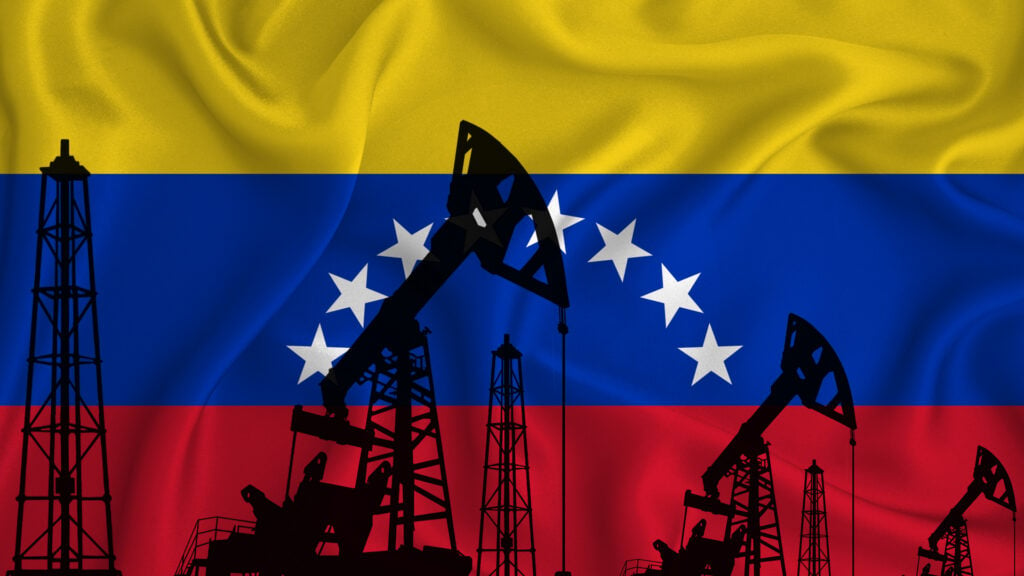
Venezuela holds the world’s largest proven oil reserves, estimated at around 303 billion barrels, but it consistently earns only a fraction of what other major exporters make from its crude exports and suffers one of Latin America’s most severe economic crises.
Venezuelan President That of Nicolas Maduro The capture is the latest in a series of setbacks for the Latin American nation.
On the face of it, Venezuela should be immensely rich. Its oil reserves exceed those of Saudi Arabia and the United States combined. But the country’s oil exports generated only about $4 billion in revenue in 2023, a tiny share compared to Saudi Arabia’s roughly $181 billion, according to an Al Jazeera report. report. This mismatch between reserves and export revenues is a central element of Venezuela’s “cash crunch” situation.
Don’t miss:
Several structural factors contribute to explaining this gap:
-
Venezuela’s oil is mostly made up of extra-heavy crude, mainly from the Orinoco belt, which is more expensive to extract and refine and sells at a discount.
-
The state oil company, PDVSAhas suffered from years of underinvestment, mismanagement and aging infrastructure.
-
Government subsidies have kept gasoline extremely low domestically, reducing export incentives and tax revenues.
Experts point to decades of policy missteps that have undermined the oil sector and the economy as a whole.
Under the presidents Hugo Chavez and Maduro, oil revenues were diverted to finance social programs, subsidies and political spending rather than being reinvested in technology, maintenance and diversification, according to a DW report.
Chávez’s frequent PDVSA overhauls and purges of technical staff weakened institutional capacity.
Trending: An EA co-founder is shaping this venture-backed market –Now you can invest in the next big gaming platform
By the end of the 20th century, Venezuela had become dangerously dependent on crude oil exports for government revenue, foreign exchange, and social spending. Oil accounted for more than 90% of export earnings at its peak, according to World Bank data. This extreme concentration exposed the economy to volatile oil prices while discouraging investment in agriculture and manufacturing – a classic example of the resource curse, a concept widely documented in the economic literature.
Instead of using oil revenues to build a diversified economy, Venezuela has let oil revenues crowd out other sectors, leaving growth almost entirely tied to crude prices.
The broader economic collapse is linked to this failure of governance. According to a analysis of the Venezuelan crisis by the Borgen Project, extreme dependence on oil hurt resilience when oil prices fell sharply in the 2010s, leaving the government with massive deficits and few alternatives.
Inflation accelerated, eroding incomes and savings, and in the late 2010s Venezuela experienced one of the worst hyperinflations in modern history.
Longstanding domestic challenges are compounded by international sanctions and geopolitical pressures. U.S. sanctions targeting Venezuela’s oil exports and financial transactions have restricted the country’s access to global markets and financing, reducing exports and investments.
These measures, intensified under successive US administrations, including renewed pressures in the 2020s, have contributed to falling export volumes and logistical hurdles.
For example, increased U.S. controls have significantly limited PDVSA’s ability to sell oil globally, leading to situations where storage tanks fill with unsold oil because tankers are not likely to face sanctions-related repercussions, according to one report. report by Reuters.
Even if a few tankers, sanctioned or not, still arrive, overall exports remain well below their potential.
See also: If there was a new Jeff Bezos-backed fund offering Target return of 7-9% with monthly dividends would you invest in it?
Saudi Arabia demonstrates that oil dependence does not necessarily lead to collapse. Like Venezuela, it nationalized its oil sector, but unlike the Latin American nation, Riyadh has insulated its oil operations from daily politics and encouraged professional management as part of a long-term economic reform plan known as Vision 2030.
Under this strategy, oil surpluses are not only spent, but saved and invested through the Public Investment Fund – one of the world’s largest sovereign wealth funds – which is aligned with the country’s diversification goals and has expanded its asset base through share transfers from state oil companies.
As a result, the contribution of non-oil economic activity increased by almost half, according to data of the analysis by the Ministry of the Economy and Planning of data published by the General Authority for Statistics (GASTAT).
Unlike the Venezuelan model, Norway has avoided the resource curse by treating oil as an inheritance rather than an income.
Oil revenues flow to the Global government pension fundnow the world’s largest sovereign wealth fund, while a strict fiscal rule limits public spending to around 3% of the fund’s expected return.
At the same time, the majority state-owned oil producer, Equinor, is commercially managed under a transparent rules-based system.
Read next: Sam Altman says AI will transform the economy – This platform allows investors to quickly back private technology
Photo courtesy: Shutterstock
UNLOCKED: 5 NEW PROFESSIONS EVERY WEEK. Click now to get daily best business ideasplus unlimited access to cutting-edge tools and strategies to gain an edge in the markets.
Get the latest stock analysis from Benzinga:
This item Why Venezuela is poor despite having the largest oil reserves in the world originally appeared on Benzinga.com