Physical Address
304 North Cardinal St.
Dorchester Center, MA 02124
Physical Address
304 North Cardinal St.
Dorchester Center, MA 02124
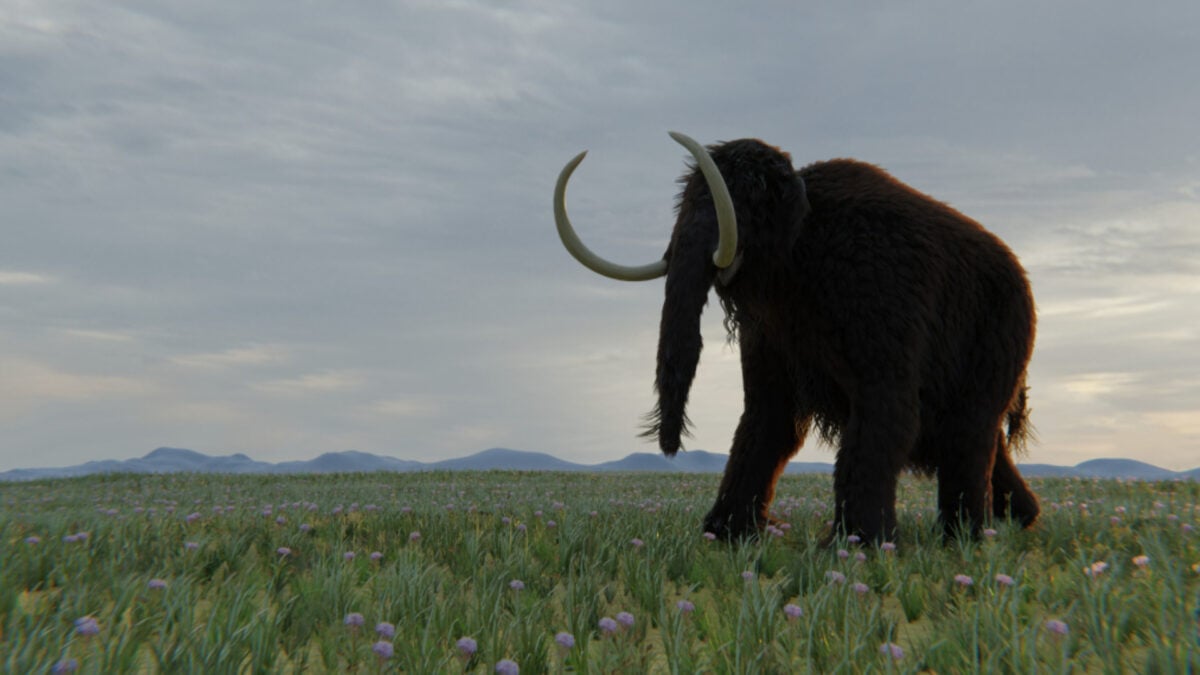

In a case of mistaken identity, the fossils of two whales were disguised as the backbones of a woolly mammoth. The fossilized remains were kept in a museum for decades before further investigation revealed the colossal mistake.
The two epiphyseal plates were discovered in Alaska in 1951 and initially thought to be the fossilized bones of a woolly mammoth. The remains were housed in the archives of the University of Alaska Museum of the North for more than 70 years until a team of researchers radiocarbon dated the fossils, revealing that they were too young to belong to the extinct species.
Instead, the researchers, led by Matthew Wooller of the University of Alaska Fairbanks, discovered that the fossils were actually those of a minke whale and a right whale from the North Pacific. Their conclusions are detailed in a paper published in the Journal of Quaternary Science.
The mislabeled fossils came to light through the museum’s Adopt-a-Mammoth program, which allows the public to choose a woolly mammoth fossil for further testing. As the researchers soon realized, they weren’t actually working with mammoth fossils.
The researchers used radiocarbon dating to determine the age of the fossils and found that they date back about 2,000 to 3,000 years. Woolly mammoths, on the other hand, became extinct around 10,000 years ago, with a few small populations surviving until 4,000 years ago. If the fossils in question belonged to a woolly mammoth, the discovery would have been completely different.
Intrigued by the results, the researchers chose to dig a little deeper before claiming to have discovered the youngest woolly mammoth fossils. The team used stable isotope analysis to study the specimen’s history, diet and movements by examining small changes in its isotope ratios.
The results show higher levels of nitrogen and carbon than those found in terrestrial herbivores like the woolly mammoth. Instead, the results more accurately matched sea creatures.
To identify which animal it was, researchers extracted mitochondrial DNA from the fossils and confirmed that the remains once thought to come from a woolly mammoth actually belonged to two whales.
Even after identifying the real animal behind the fossilized bones, researchers were intrigued by how the whales were found far from Alaska’s shores.
The team believes the whales may have swum hundreds of miles across ancient rivers and coves before dying. That said, this theory seems unlikely for the North Pacific right whale, a large creature that feeds on plankton not found in rivers. Another theory is that the whales’ remains may have been moved by ancient humans, either to use them as tools or to trade them.
Then there’s the other possibility: The fossils were actually found near the coastline, but their location was mislabeled. This would amount to a two-for-two human error against the woolly mammoth.