Physical Address
304 North Cardinal St.
Dorchester Center, MA 02124
Physical Address
304 North Cardinal St.
Dorchester Center, MA 02124
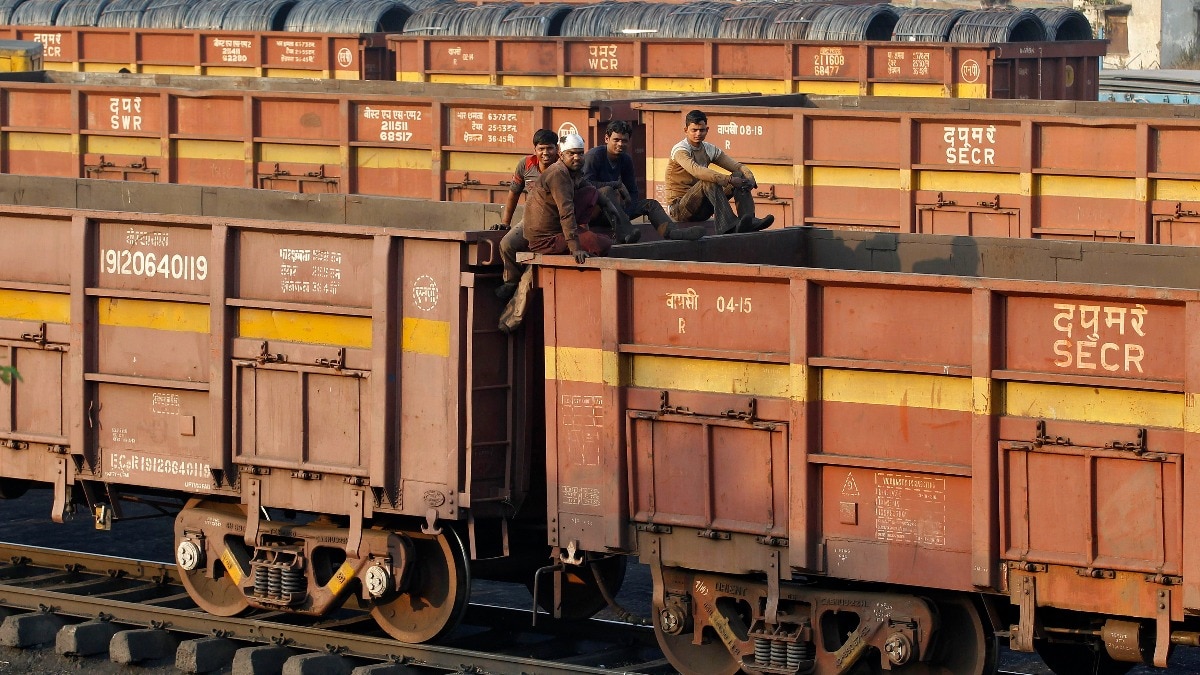
The Railway Board has revised the Gati Shakti Multimodal Freight Terminal (GCT) policy to increase private sector participation in setting up freight terminals along the rail freight corridors with flexible bidding norms and allow unutilized railway assets under the new policy.
According to this policy, the revision was necessary to make it more participatory and attract more investments. GCTs are located along railway sidings to speed up the movement of goods and reduce costs.
A former senior railway board official said the revised changes are important to increase customer participation.
The implementation of GCT 2026 published last week depends on the zonal railways.
“However, the instructions of the Railway Board are not uniformly followed by the zonal railways, especially in the case of private sidings leading to delays and additional costs,” the official added.
Indian Railways has approved proposals for 306 GCTs to facilitate development of freight terminals. So far, 118 new GCTs have been commissioned with mobilization of Rs 8,600 crore of private investment since the policy came into force in December 2021.
Importance
The main source of revenue for Indian Railways is from freight and sidings contribute almost 80% as coal loading zones are also part of private sidings with the biggest customers – Coal India, NTPC, SAIL, Tisco and Ultratech, among others.
The new policy has an interesting clause according to which the Railway Board has the right to change the tender parameters if a better revenue generation model is suggested. It also allows zonal railways to use assets that were not previously used under this policy, such as unused freight sheds or railway lines.
The revised version streamlines the procedure for brownfield sidings wishing to upgrade to GCT. Previously, they had to make sure there were no charges or lawsuits with the railroads. Now only those terminals/sidings where they want to opt for GCT should be exempt from legal action.
“Even if there is a court action and the railways appeals, the customer can opt for conversion to GCT after giving an affidavit stating that they will comply with the court order,” said the official, who has closely supervised the implementation of GCT.
To reduce inordinate delays, the policy has now set specific deadlines, which were earlier only indicative, such as approval by the Chief Engineer/Planning and Design Department which must be done within two weeks and Single Interlock Plan (SIP) which must be approved within four weeks.
“These delays are causing price hike and customer irritation. It has also been clarified that the construction date will begin after the land free of any encumbrances is provided to the GCT operator,” the official further explained.
It was also clarified that the GCTO can deny access to value-added services such as the use of silos, which are mainly used for the storage of food grains or cement, thereby preventing contamination of the products.
The idea behind GCTs was to move more goods to the railways and reduce logistics costs. The share of Indian Railways in overall logistics is around 27%, although it is the cheapest mode of transport compared to road, which has a significant share of 65%.