Physical Address
304 North Cardinal St.
Dorchester Center, MA 02124
Physical Address
304 North Cardinal St.
Dorchester Center, MA 02124
Published on December 29, 2025
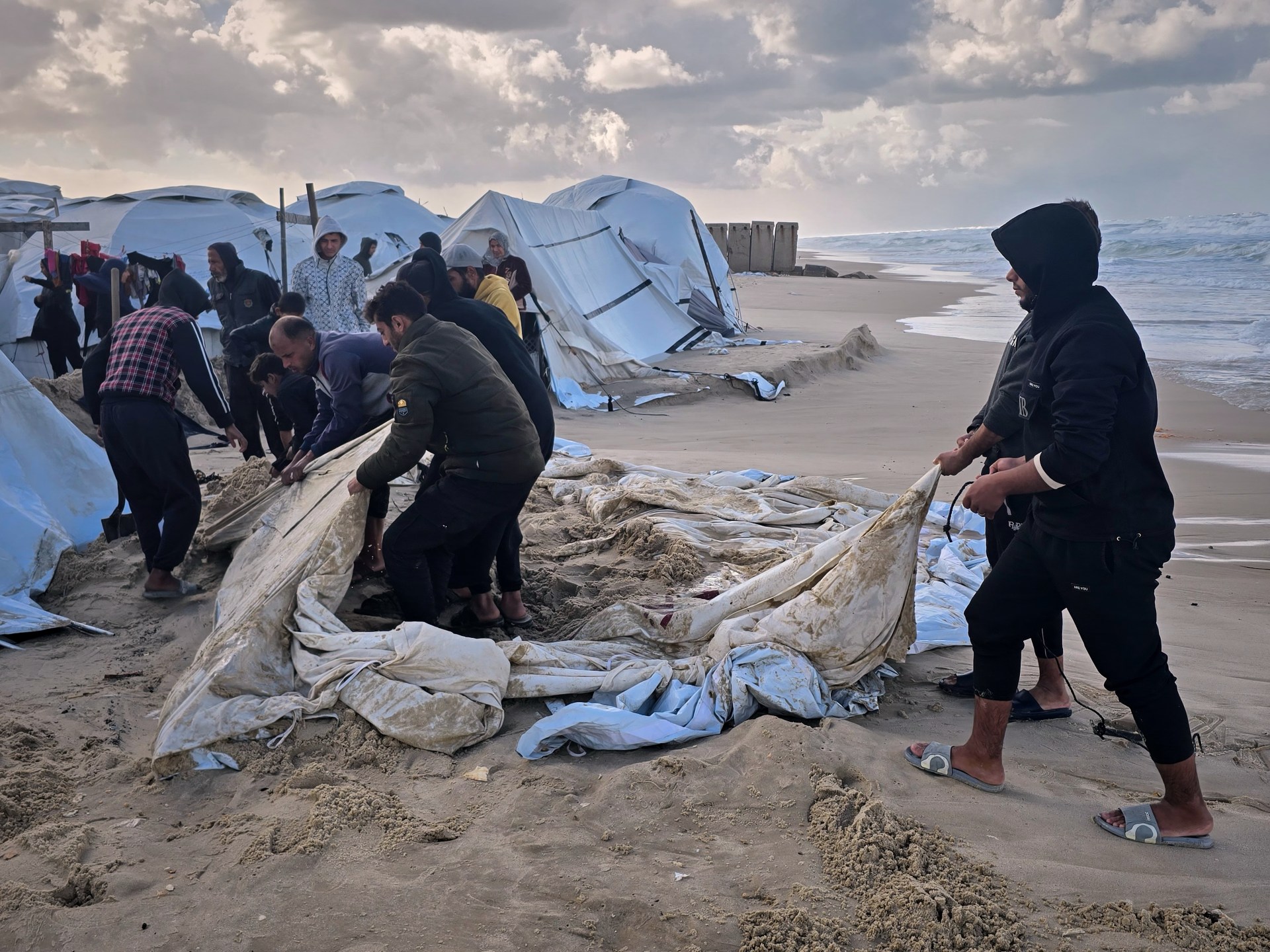
Winter rains lashed the Gaza Strip this weekend, flooding displacement camps with water up to their ankles as Palestinians struggled to stay dry in flimsy, worn-out tents. These Palestinians were displaced after more than two years of genocidal war by Israel, which destroyed much of the besieged enclave.
In Khan Younis, sodden blankets and flooded clay cooking ovens added to the misery. Children in flip-flops navigated puddles while adults desperately used shovels and tin cans to scoop water out of tents or dig mud out of collapsed shelters.
“Pddles of water formed and there was a bad smell,” said Majdoleen Tarabein, displaced from Rafah in southern Gaza. “The tent is gone. We don’t know what to do or where to go.”
She and her family tried to wring out the soggy blankets by hand.
“When we woke up in the morning, we found that water had entered the tent,” said Eman Abu Riziq, also displaced in Khan Younis. “Here are the mattresses. They are all completely soaked.”
She added that her family is still mourning the death of her husband less than two weeks ago.
“Where are the mediators? We don’t want food. We don’t want anything. We are exhausted. We just want mattresses and blankets,” pleaded Fatima Abou Omar while trying to stabilize a collapsing shelter.
At least 15 people, including three babies, have died this month of hypothermia following rains and plunging temperatures, according to Gaza authorities.
Rescuers have warned against staying in damaged buildings due to the risk of collapse, but with much of the territory in ruins after relentless and ongoing Israeli bombardment, shelter options are few. United Nations estimates from July indicate that nearly 80 percent of Gaza’s buildings have been destroyed or damaged.
Since the start of the ceasefire between Israel and Hamas, 414 people have been killed and 1,142 injured, with the total Palestinian death toll reaching at least 71,266, according to the Health Ministry.
Aid deliveries to Gaza are well below the amounts required by the ceasefire, humanitarian organizations report. The Israeli military authority overseeing humanitarian aid said 4,200 aid trucks entered Gaza last week, along with sanitation equipment and winter supplies, but declined to specify the quantity of tents provided. Humanitarian groups stress that current supplies cannot meet the massive needs.
Since the ceasefire, around 72,000 tents and 403,000 tarpaulins have entered Gaza, according to Shelter Cluster, an international aid coalition led by the Norwegian Refugee Council.
“Gaza residents are surviving in flimsy, waterlogged tents and among ruins,” Philippe Lazzarini, commissioner general of the United Nations refugee agency in Gaza, said on social media. “There is nothing inevitable about this. Aid supplies are not being allowed to arrive at the scale required.”