Physical Address
304 North Cardinal St.
Dorchester Center, MA 02124
Physical Address
304 North Cardinal St.
Dorchester Center, MA 02124
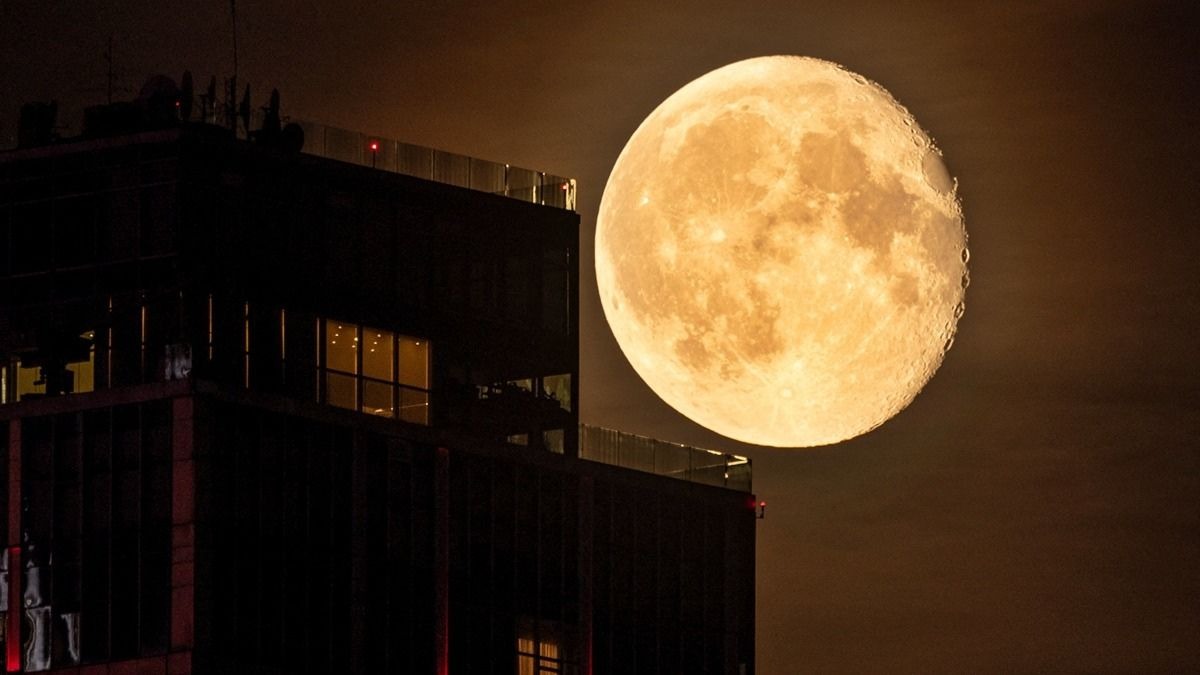
A dazzling celestial spectacle awaits skywatchers as the “Super Wolf Moon” lights up the night sky on January 3, marking the first full Moon of 2026 and one of the brightest lunar spectacles of the year.
Rising opposite the Sun in the constellation Gemini, the Moon will appear slightly larger and noticeably brighter than an average full Moon. Indeed, it is considered a supermoon – a phenomenon that occurs when a full Moon coincides with perigee, the point in its orbit where it is closest to Earth.
Why this supermoon stands out
The Moon’s orbit around Earth is elliptical, meaning its distance varies greatly: from about 356,000 km at perigee to 406,000 km at apogee. On January 3, the Moon will be about 362,000 km away, making it appear 6 to 14 percent larger and 13 to 30 percent brighter than when it is furthest from Earth.
This particular full Moon is receiving what astronomers describe as a “triple boost.” Not only is it full and close to perigee, but it also occurs when the Earth itself is close to the Sun (near perihelion), thereby increasing the amount of sunlight reflected from the lunar surface. The result is one of the brightest full moons of 2026, although the difference in size can be subtle to the naked eye.
Folklore behind the “Wolf Moon”
January’s full Moon is traditionally called the Wolf Moon, a name rooted in Northern Hemisphere folklore that associates long, cold winter nights with the howls of wolves. Although the name is largely cultural today, it remains a popular way to distinguish each month’s full moon and adds a touch of mythology to the astronomical event.
Astronomically, the Moon will be exactly full around 10:02-10:04 GMT on January 3, although it will appear full for a few nights before and after the peak.
When and where to watch in India
The Super Wolf Moon will be clearly visible across India. Sky watchers can observe it shortly after sunset, between 5:45 p.m. and 6:00 p.m. IST, as it rises in the east. The best views are expected at moonrise on January 2 and 3, when the Moon is low on the horizon and can take on a golden or orange hue due to atmospheric scattering.
To add to the visual pleasure, Jupiter will shine brightly near the Moon, forming a striking pair in the evening sky. The Moon will remain visible all night before setting in the west at dawn.
The night sky highlight of the year
Part of a trio of supermoons expected in 2026, the Super Wolf Moon is one of the most notable lunar events of the year. Its use does not require any special equipment, although cameras, binoculars or telescopes can enhance the experience.
For stargazers and casual observers, January’s Super Wolf Moon offers a spectacular start to the year’s celestial calendar – best enjoyed by simply stepping outside and looking up.