Physical Address
304 North Cardinal St.
Dorchester Center, MA 02124
Physical Address
304 North Cardinal St.
Dorchester Center, MA 02124
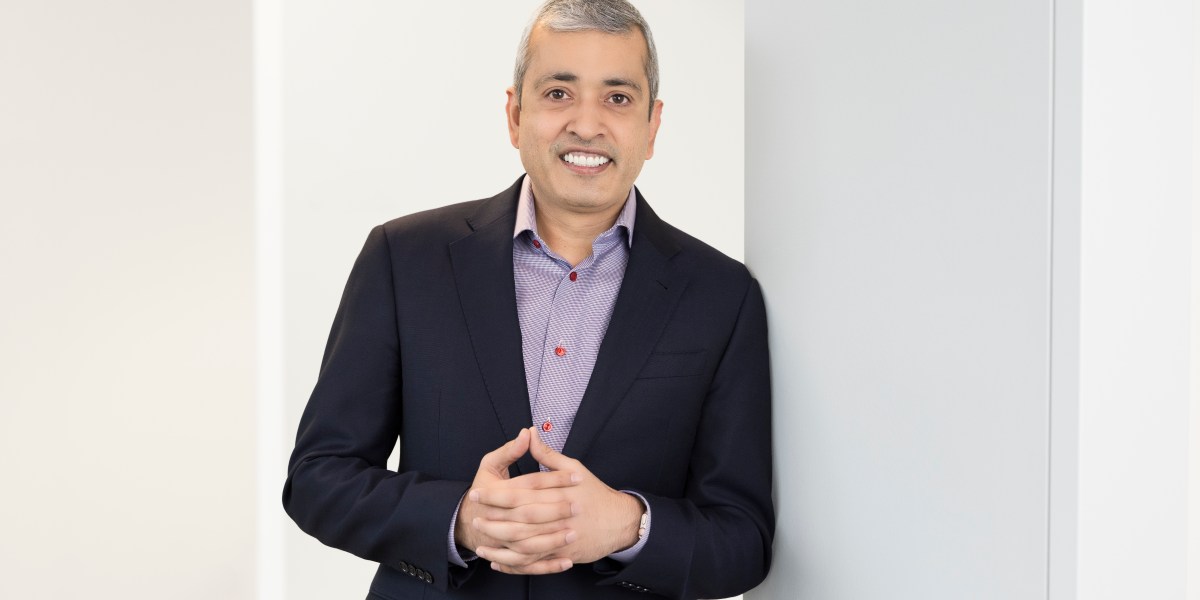
Nitin Tandon, the global chief information officer of Vanguard, says artificial intelligence is a perfect tool to address the natural imbalance between the millions of clients the investment management company serves and the just 20,000 people it employs.
“If you want to offer advice to the 50 million clients that we have today, there aren’t enough advisors in the world to do that,” says Tandon. He says that AI can improve Vanguard’s operational efficiency and create opportunities to hyper-personalize financial guidance at a massive scale, and that it could one day serve as a trusted digital advisor. “For the future, if you take this a step further, this could be a voicebot just like Alexa, where you can ask how your portfolio is doing,” adds Tandon.
Today, Vanguard, which has nearly $12 trillion in assets under management, is actively piloting various ways to infuse AI to improve the client experience. Vanguard rolled out an AI chatbot to around 2,000 employees to internally test the functionality of natural language responses to client questions, including “What’s my account balance?” and “How is my portfolio performing?” Tandon says he feels that the technology is advanced enough to handle this capability, but he wants to keep a close eye out for hallucinations, which are false or misleading outputs, and ensure the proper guardrails are in place so that the tool isn’t veering into offering financial advice.
Internally, Tandon has rolled out generative AI that permeates the business and now touches every single employee. These tools include Microsoft Copilot; AI coding-assistant tools for software developers; AI-enabled content creation platforms to support marketers; and transcription functionality to record and summarize meetings.
Earlier this year, Vanguard also debuted a new generative AI capability that produces customized client summaries for the company’s financial advisors. Using generative AI, the advisors can tailor the language to match the financial acumen of each client.
Focus areas for Tandon’s AI strategic bets include improving the client experience; the creation of a digital advisor; fraud and cyber; and developing highly specific AI tools for three roles that he believes can benefit the most from AI-driven productivity. Those focus roles are financial advisors, sales assistants, and software developers.
Already, Tandon reports that 97% of Vanguard’s employees are using AI tools, with weekly usage at 75% and daily usage at 50%. But the question that hangs over his head—and that of every CIO—is how to measure the return on investment. Tandon says he’s confident that there is value. When marketers use AI for content creation, they are saving time, and the same can be said for software developers. He can measure these gains through A/B testing that has tracked productivity for employees using AI compared to their colleagues who don’t.
“The value is quantifiable,” says Tandon. “Can I harvest that value? Not so much, and that will take a bit longer.”
His north star is that ultimately, as long as AI tools are making employees more efficient, improving the client experience, and delivering better client outcomes, that’s all a win. “If you go after that, you will be able to harvest the productivity gain,” adds Tandon.
Tandon joined Vanguard as chief technology officer in 2019 after a 17-year career at Deloitte, where he led the consulting giant’s cloud practice serving the financial services industry. Vanguard was a prior client, and he was drawn to the company’s unique investor-owned structure and the role that technology plays at the core of the business. Vanguard operates no brick-and-mortar locations, and more than 95% of its financial services transactions are performed digitally.
“It felt very different from all other financial services companies,” says Tandon. He became global CIO in 2021.
He also lauds external partnerships. Vanguard’s investments in the space include generative AI startup Writer and compliance AI startup Norm Ai. Employees at Vanguard are already using both tools internally.
A big internal project he undertook shortly after joining Vanguard was an enterprise-wide tech overhaul that he says is 86% completed. He led the migration of the company’s technology stack to the public cloud, and launched a brand new website and mobile app to make the functionality more intuitive for clients.
Tandon says he also developed a more rigorous process to measure the value of Vanguard’s data and analytics investments.
“One thing we were not happy about is, ‘Hey, we’re spending a lot of money on data, are we seeing the commensurate value?” asks Tandon. He wasn’t pleased with the prior structure, leading Vanguard to consolidate 10 data and analytics teams that were dispersed across the various business divisions into one centralized team. Ryann Swann, Vanguard’s chief data analytics officer, was hired in 2021 to steer that organization.
As he navigates Vanguard’s future with AI, Tandon says it is critical to rethink all systems, processes, and products, and how all of them can be enabled by AI. He asserts this cannot just be centrally driven. Teams need to be empowered to chart their own course.
“Our approach is to diffuse AI into the fabric of the system so that people are empowered with the right tools and the right training,” says Tandon. “And then they can reimagine their journeys, their products, their services, using AI.”
By the way, this will be our last newsletter of 2025; we’ll be back in your inbox on Wednesday, Jan. 7. Enjoy your holidays, and Happy New Year.
John Kell
Send thoughts or suggestions to CIO Intelligence here.
OpenAI is reportedly in talks to raise billions. The maker of ChatGPT is aiming to raise billions more to fund the AI startup’s operations, with The Information reporting it is seeking a valuation of $750 billion, while the Wall Street Journal says OpenAI is in talks to raise up to $100 billion in funding that could value the company at up to $830 billion. The move to raise fresh funds comes as more questions have been raised about compute costs, and if those expenses are going to be far higher than anticipated. It also comes as Anthropic, Google, and others race to release new AI models to edge out their rivals. Separately, Reuters reports that SoftBank has been selling shares in Nvidia and T-Mobile to close a $22.5 billion funding commitment to OpenAI by the end of the year.
Meta Platforms is expected to debut a new AI image and video model in 2026. The Wall Street Journal has also reported that Facebook’s parent company Meta will unveil Mango, a new image- and video-focused AI model alongside a text-based large language model called Avocado, citing an internal company Q&A held last week. The new models would come as Meta appears to have fallen behind rivals like OpenAI, Google, and Anthropic in the highly competitive AI race.
Starbucks hires Amazon vet to CTO role. Coffee giant Starbucks has announced the appointment of its new chief technology officer, Anand Varadarajan, who previously spent 19 years at Amazon, most recently leading product, technology, and supply chain for the Amazon Fresh and Whole Foods Market businesses. Varadarajan succeeds Deb Hall Lefevre, the former Starbucks CTO who departed in September, and will report directly to CEO Brian Niccol. Separately, at restaurant chain Subway, CIO Dave Blankenship said he would leave the sandwich chain after five years in C-suite leadership roles at the company. Blankenship had spent four years as CTO and most recently, a year as CIO.
Cursor scoops up code review startup Graphite. In a cash-and-equity transaction, Cursor will soon close a deal to buy Graphite—which will continue to operate as an independent product, but with deeper integration into Cursor’s code editing platform. Cursor CEO Michael Truell told Fortune that a bottleneck has emerged in AI-enabled coding because these tools have become much faster at writing production code, while the reviewing process hasn’t changed much in the past few years. “We focus on the writing side of things, Graphite has focused on the review side of things,” says Truell. “We think the two together can make something even better.”
AI regulation bill signed into law in New York. Gov. Kathy Hochul on Friday signed a law that will establish new standards to govern the development of AI models, legislation that the New York Times reports is close to a law that was recently signed in California. Tech companies scored a win in weakening the bill, removing measures that would have required them to take extra steps to ensure the AI models they develop are safe. The bill is the first AI legislation enacted into law since President Donald Trump signed a recent executive order that aimed to limit these state laws.
An overwhelming majority of businesses plan to boost spending on AI in 2026. IT spending is poised to leap by the double digits in 2026, according to recent surveys from market researchers including IDC Worldwide Black Book and Gartner, and the latest report from CompTIA is similarly bullish. The for-profit trade association for the IT sector says that AI investments will “significantly increase” for 35% of organizations next year and “modestly increase” for 49%. Only 16% report no change or a decrease, according to a survey of 1,012 business and technology professionals.
“Even though they still expect to have some of this broader economic uncertainty moving into next year, they recognize that technology is going to help them meet any of their business objectives,” Seth Robinson, CompTIA’s vice president of industry research and the report’s author, tells Fortune. “There has to be continued investment in technology. Now, what exactly does the shape of that investment look like, I think, is a source of great debate.”
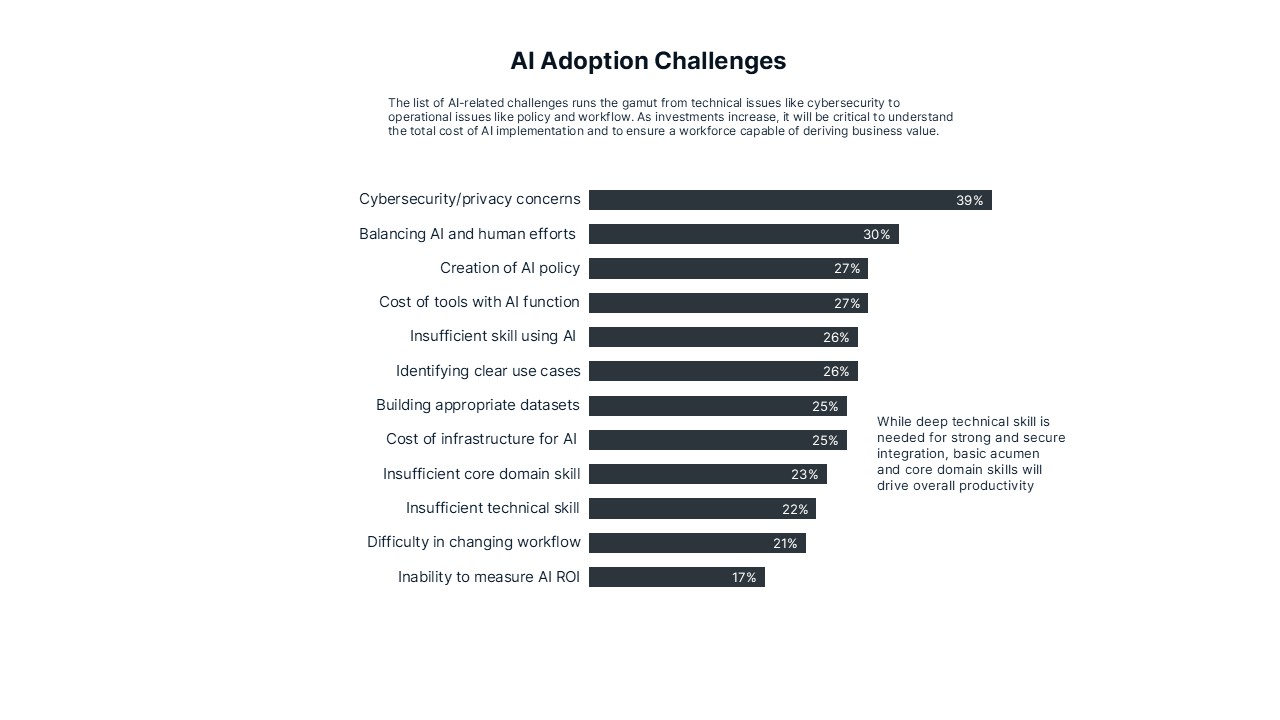
There are plenty of challenges that CIOs and CTOs must confront as they adopt AI, with the survey finding that cybersecurity/privacy concerns (39%), balancing AI and human efforts (30%), and the creation of AI policy (27%) were the top barriers they are still working to solve.
Courtesy of CompTIA
Hiring:
– Veterans in Healthcare is seeking a CIO, based in Boston. Posted salary range: $203.1K-$304.7K/year.
– Escalon Services is seeking a CIO, a remote-based role. Posted salary range: $225K-$300K/year.
– St. John’s Episcopal Hospital is seeking a chief digital information officer, based in New York. Posted salary range: $250K-$285K/year.
– Harris is seeking a VP and CTO, based in St. Paul, Minnesota. Posted salary range: $190K-$304K/year.
Hired:
– U.S. Secret Service promoted Chris Kraft to serve as CIO, after he previously served as the agency’s acting CIO. Kraft joined the Secret Service from the Department of Homeland Security, where he served as the acting CTO and deputy CTO for AI and emerging technology. Kraft will oversee IT operations, software and cybersecurity for the agency, managing a workforce of 400 personnel.
– SentinelOne appointed Jeff Reed to serve as CTO, joining the cybersecurity company to oversee the acceleration of innovation across endpoint, cloud, identity, and AI security. Reed joins SentinelOne after most recently serving as chief product officer at cybersecurity provider Vectra AI. He also previously held leadership roles at tech firms Google, Cisco, and Symantec.
– Provident Bank promoted Satish Harikrishnan to serve as CTO, overseeing the New Jersey bank’s enterprise technology platforms, infrastructure, application development, data, and vendor relationships. Harikrishnan initially joined the bank in 2023 as head of architecture and previously worked for IBM and People’s United Bank.
– KORU Medical Systems has appointed Eric Schiller as CTO, effective December 29, to lead product development and the innovation pipeline for the medical technology company. Most recently, Schiller served as the global head of device development portfolio at French biopharmaceutical giant Sanofi. He also spent more than a decade at Bristol-Myers Squibb and Celgene.
– Bluehost appointed Antonis Papatsaras as CTO, effective immediately, where he will steer product architecture, customer experience technology, data, and AI capabilities for the web hosting company. Papatsaras previously served as CTO at social media management software provider Hootsuite and as CTO at software company DocuSign.
Forté promoted Josh Braun to serve as the IT services company’s first-ever CIO, effective immediately. As CIO, Braun will oversee IT and digital infrastructure, which includes security, internal IT support, systems architecture, and long-term technology strategy. Braun joined Forté in 2016 as director of IT and was promoted to vice president of IT in 2019.