Physical Address
304 North Cardinal St.
Dorchester Center, MA 02124
Physical Address
304 North Cardinal St.
Dorchester Center, MA 02124
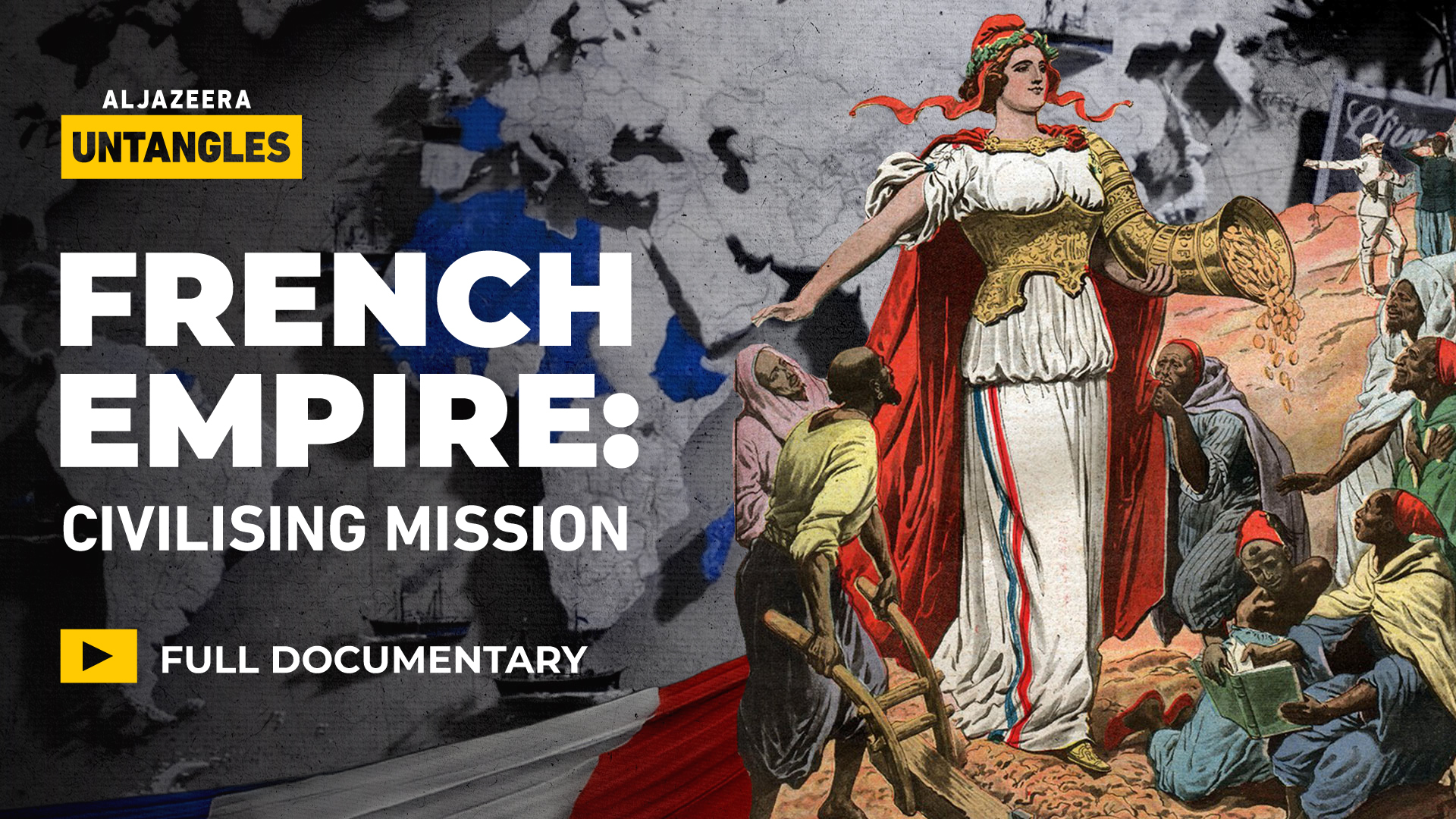
How the French Empire built its power through language, schooling, and cultural assimilation and what that means today.
Beyond armies and violence, France built its empire thanks to language, schools and cultural influence. This film explores how assimilation became a method of government and a source of resistance.
At the heart of French colonial rule was the “civilizing” mission, a doctrine that purported to elevate colonized societies through education, administration, and the French language. In practice, this system sought to reshape the identities, loyalties, and cultures of colonized peoples, replacing local traditions with French norms while maintaining strict political and economic control. Schools, legal systems, and bureaucracies have become tools of empire as powerful as armies.
Through case studies in Algeria, Indochina and West Africa, the documentary shows how colonial administrations operated on the ground. In Algeria, settler colonialism and massive repression led to war. In Indochina, education and bureaucracy coexisted with exploitation and nationalist resistance. In West Africa, language policy and indirect rules have reshaped social hierarchies and governance.
This episode examines how resistance movements challenged the promise of civilization, forcing France to confront the contradictions at the heart of its empire. Anticolonial struggles, intellectual movements, and armed uprisings not only weakened imperial rule, but also reshaped French politics, culture, and identity themselves.
The documentary also places French colonial strategies in a broader modern context. In the contemporary world, American projects influence less through formal empire than through soft power. Hollywood cinema, television, and digital platforms disseminate American values, lifestyles, and narratives on a global scale, shaping the cultural imagination in ways that echo earlier imperial projects. At the same time, American dominance in higher education, academic publishing, and institutional standards helps define what knowledge is valued, taught, and legitimized around the world.
It also establishes direct links between French colonialism and the modern world. Contemporary debates about language, immigration, secularism, and inequality are deeply rooted in colonial systems designed to classify, discipline, and extract. Many modern public institutions, educational models, and economic relations reflect structures first imposed under empire.
By tracing how cultural control, education and administration functioned as instruments of power, the documentary reveals how the legacy of French colonialism continues to shape modern capitalism, global inequality and postcolonial relations today.
Published on December 24, 2025